

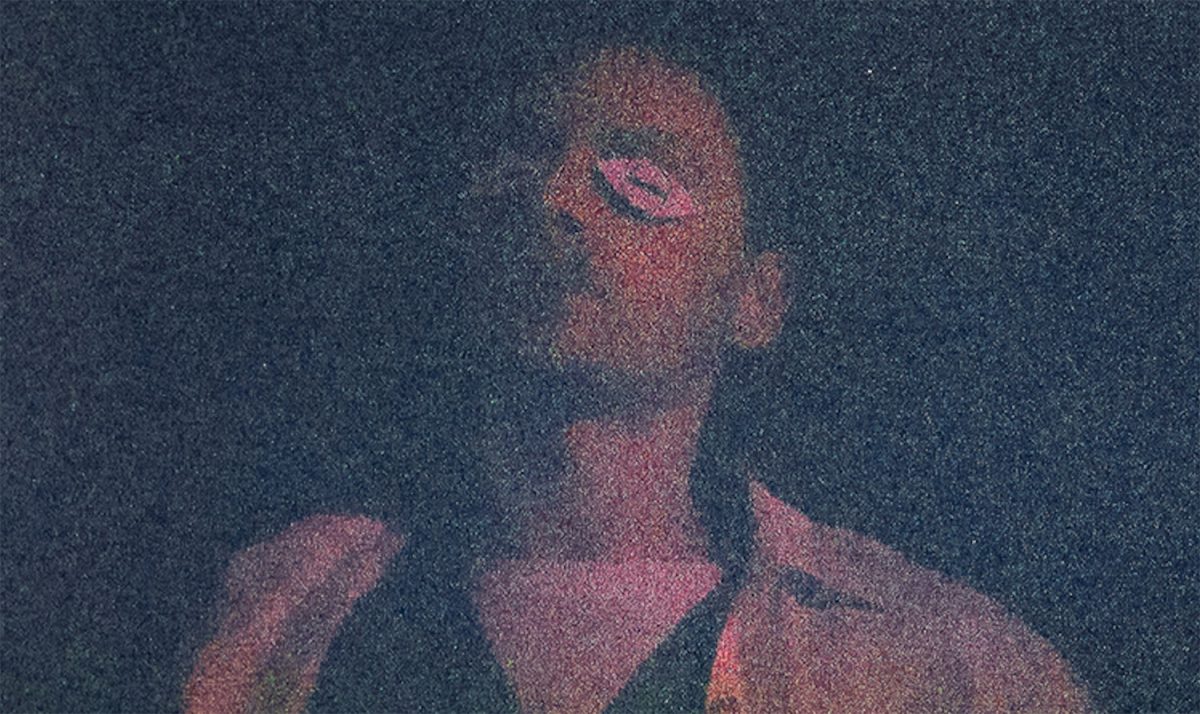
“Croak Dream” by Puma Blue (real name Jacob Allen) is one of his most dreamy, bold, but lonely productions.
Allen’s “Croak Dream” is beautifully produced, drawing from elements of krautrock, jungle breakdowns, and trip-hop, alongside his sirenesque vocals, to create a dreamlike atmosphere that carries listeners through different states of consciousness. It transports the listener to an alternate universe cloaked in introspection, intimacy, and lush saxophone melodies.
The album is composed of 11 songs, totalling 39 minutes; however, its brief time is redeemed by its emotional and thematic substance. Each song guides the listener through a journey shaped by the narrator’s dreams and the poetry that emerges from them.
I. Desire
The opening track starts with a pulsing, gentle beat where we are welcomed by Allen’s heady vocals speaking of yearning, introspection and as the title states, “Desire.” Its foundation is set with electronic elements and synth-laden sound that create a warm feel to the song.
The song’s chorus elevates with a blend of vocal layering for texture and atmospheric drum loops, which is brought down again by the gentle beat heard at the beginning of the track. Therefore, signaling a melodic release, perfectly preparing the listener to descend into the melancholy world of “Mister Lost.”
II. Mister Lost
“Mister Lost” begins with an electronic groove, layered with vocals that feel more at arm’s length for this track. In contrast with “Desire,” where Allen’s vocals are intimate, in “Mister Lost,” they whisper criticism. The opening lyric listlessly whispers, “What are you escaping from?” It sets a tone experienced throughout the rest of the track.
“Mister Lost” unfolds as a third-person narrative about a man overwhelmed by modern society, positioning the song as one of the nightmares that populate the world of “Croak Dream.” The lyrics depict a character caught between
imagination and reality, daydreaming on the train in fragments of poetry, only to find himself alone at a bar after work. This contrast underscores his quiet disillusionment, portraying a life shaped by routine, isolation, and the slow erosion of creative outlet.
The song inspires reflection in the listener on their own role in today’s society, listening to the narrator accuse the song’s protagonist of disappointing and being “Just a cog” in the machine. The song ends with a repetition of the opening lyric “What are you escaping from? / Mister Lost,” where the narrator’s voice fades out and leaves the listener sitting with the discomfort brought by the reality of the song.
III. Hold You
“Hold You” opens with a distorted sound that makes appearances throughout the track until it gets its full solo halfway through, revealing itself to be a saxophone that continues to give pieces of itself for the rest of the song. The sound is set at a slower pace than previous tracks, with fewer electronic elements signifying the desire to emphasize Allen’s vocals for this track.
“Hold You” is composed of a blend of the storylines of the songs prior to it, such as the yearning illustrated in “Desire” and the melancholic atmosphere exhibited in “Mister Lost.” This can be seen in the repeated chorus,
“I’ll never hold you / All the things I never told you / Poems I never showed you.”
This is followed by layers of elements, one of which is Allen’s siren-like vocals of crying out, creating a voidish atmosphere and leaving the speaker with a feeling of anguish.
IV. Croak Dream
“Croak Dream,” the title track of the album, fulfills its purpose beautifully as a standout production compared to the rest of the album’s songs. The track serves as the peak of the electronic aspect of the album, a wake-up from the dreamscape of prior tracks. Compared to “Hold You,” this track picks up the pace again with strong electronic elements, jazz funk, and a dark, dreamy atmosphere.
The story behind this song stands out to me deeply. “Croak Dream” centers on someone who has haunted Allen’s nightmares for years, and the song serves as a way to unpack that bond– an attempted exorcism meant to lay the ghost to rest, or death as suggested by the lyrics. As the song ends, the words “This is the death, this is the death” are repeated until it experiences a lyrical fade to black, which can be interpreted as a symbolic fading away of Allen’s ghost.
V. Heaven Above, Hell Below
As the beginning tracks included jittery drum beats and experimental electronic elements, the back half of the album shifts to softer, more lo-fi-inspired melodies, a transition that begins with “Heaven Above, Hell Below,” my favorite track from this album.
“Heaven Above, Hell Below” is built on a background guitar, soft piano, and Allen’s vulnerable vocals, creating an intimate, more acoustic-leaning sound. The song’s restraint allows its lyrics’ introspection to take focus, contemplating the choices we make in our lives while quietly reminding the listener that time itself is finite and unknowable.
To drive the song’s close, Allen breaks into cascading layers of ethereal harmonies, forming a seance of sound that meditates on the haunting refrain, “When am I gonna die?” and the desperate plea, “Oh, I don’t wanna die.” This repetition becomes a trapping, cyclical thought, lingering in the listener’s mind and forcing reflection on how fleeting our time on Earth truly is.
VI. (Fool)
“(Fool)” continues the album’s lo-fi aesthetic while introducing more pronounced percussion and an atmospheric saxophone that adds tension and movement. The track revisits the themes of longing first explored in “Desire” and the dreamlike states of the title track “Croak Dream,” blurring the line between fantasy and reality.
The song opens in the safety of dreams, where the speaker imagines their lover without consequence, but upon waking, that certainty dissolves into hesitation
and fear of making a mistake in reality. There is an uneasiness to Allen’s vocals, delivered with caution, as emphasized by the repeated line, “Oh, I don’t wanna be a fool.” The track closes with the unfinished refrain, “A fool, a fool, a-,” trailing off in Allen’s beautiful vocals, leaving the listener suspended in unresolved longing.
VII. Hush
“Hush” sustains the album’s pervasive uneasiness, opening with a slow, unsettling piano line layered with faint electronic feedback that immediately establishes tension. This atmosphere is established by the opening lyrics, “What do I do? / What do I say? / To make it all go away,” which frames the song in anxiety and emotional paralysis.
As the chorus emerges, “Hush, sweet baby, don’t you cry / No need to bleed so heavy from those eyes,” percussion and sparse guitar strings are introduced, transforming the track into something darker and more menacing, evoking the sense of a villain born.
The song suggests a love turned bitter, shaped by betrayal and emotional rupture. As saxophone melodies weave in, the atmosphere grows heavier and more claustrophobic, reinforcing the lyrical implication of irreversible change. These elements illustrate the speaker’s descent into a psychological alleyway of no return, becoming a husk of their former self, unable to reclaim who they once were.
VIII. Jaded
“Jaded” stands apart from the rest of “Croak Dream” as a largely instrumental track, continuing the album’s early electronic patterns and intense percussion. It incorporates familiar elements from prior songs, such as the distorted saxophone heard in “Hold You,” creating a sense of thematic continuity.
Allen uses his voice not as a narrative tool but as an additional instrument, whispering phrases so distorted that their meaning becomes unintelligible. This obscured vocal layer, combined with the dense, overlapping instrumentation,
produces the sensation of sounds rushing past too quickly to grasp. The effect mirrors the experience of time slipping away, life moving forward faster than one can control. As a result, the track drips with regret and missed opportunity.
IX. Silently
“Silently” has a similar sound to some of Allen’s earlier works, while incorporating the intense percussion that has become a defining pattern across the album. This track blends themes found in “Hush” and “Hold You,” speaking of poetry and a path of no return.
The speaker conveys a sense of being emotionally immobilized, trapped in a particular moment in life and rendered voiceless. The track’s central irony emerges in its closure, as Allen repeatedly layers the lyric “Silently, silently.” Though the speaker is outwardly silenced, the accumulation of vocals suggests an internal eruption, as if the mind itself is finally giving voice to buried vulnerability.
X. Cocoons
The atmosphere of “Cacoons” carries a noticeably softer vibe than the previous tracks, unfolding as a lo-fi ballad that feels almost lullaby-like. While the song leans heavily on guitar, it favors gentle distortion over a purely acoustic sound, giving the track a hazy, dreamlike texture. The melancholy that runs through “Croak Dream” is still present here, but rather than bitterness, it takes on a nostalgic warmth, as if the speaker has paused to reminisce.
Where earlier tracks evoke a darker atmosphere and nightmarish experience for the speaker, “Cocoons” reflects more as a daydream. The speaker looks back on a time of happiness, entwined with their lover, a sentiment captured in the lines, “I know that you can feel it when I stall,” and later, “Together lost in such a deep embrace / Holding one another, we escape.”
This memory is cherished as something almost unreal, yet the song ultimately grounds itself in the realization that the love once felt functioned more as an escape from reality than something that could truly endure within it. A realization that comes full circle with the charged emotions bleeding from the final track, “Yearn Again.”
XI. Yearn Again
In “Yearn Again,” we return to the percussion patterns seen throughout “Croak Dream,” this time accompanied by a steady, clear saxophone line that runs throughout the track. Unlike many of the preceding songs, its rhythm remains rigid and unchanging; there is no elevation, no release, thus suggesting a deep fatigue within the speaker. Allen’s vocals are consistently distorted, and while the lyrics carry the bitterness present in earlier tracks, they are now laced with resignation and defeat rather than anger.
The song’s production evokes the sensation of end credits rolling: the dream has concluded, and life continues unchanged. If this were a movie, the protagonist is walking off into the horizon, no resolution in sight. The narrator feels reduced to another cog in the machine, moving forward without transformation, as all aspirations remain confined to the dream world.
In the closing moments, the repeated line “I’ll find a reason to yearn again” lingers unresolved, forcing the listener to question whether it functions as a desperate grasp for meaning or a final, spiteful act of defiance– an ambiguity that fittingly closes the album.



JR • Feb 16, 2026 at 4:01 pm
The reviewer is deeply connected to their music!